ANT recently participated in a competition for Concentrico, Logroño's international architecture and design festival. This year, the task was "urban climate island" to counteract climate changes with increased heat and little shading in the city of Logroño.
Assignment text below:
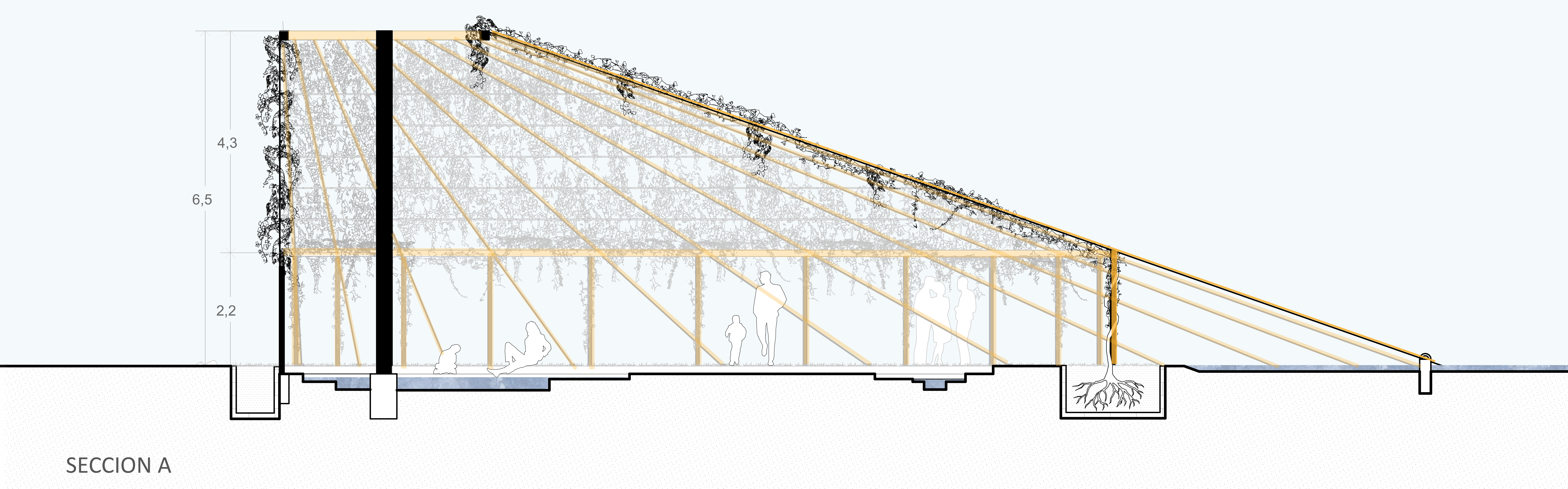
Our proposal envisions a place of comfort and rest—a focal point for urban life where people can meet, share stories, and take a break from the pace of the city, its climate, and, for some, the long journey ahead. The pavilion is designed to interact with the surrounding social environment, drawing inspiration from the rich historical, cultural, and geographical symbols that define Logroño, La Rioja, and its connection to Spain.
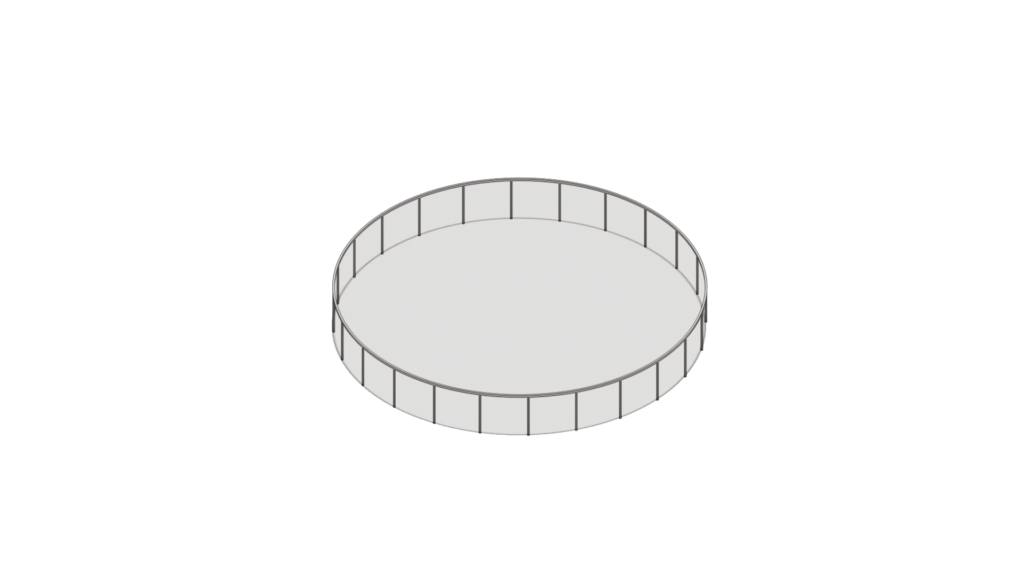
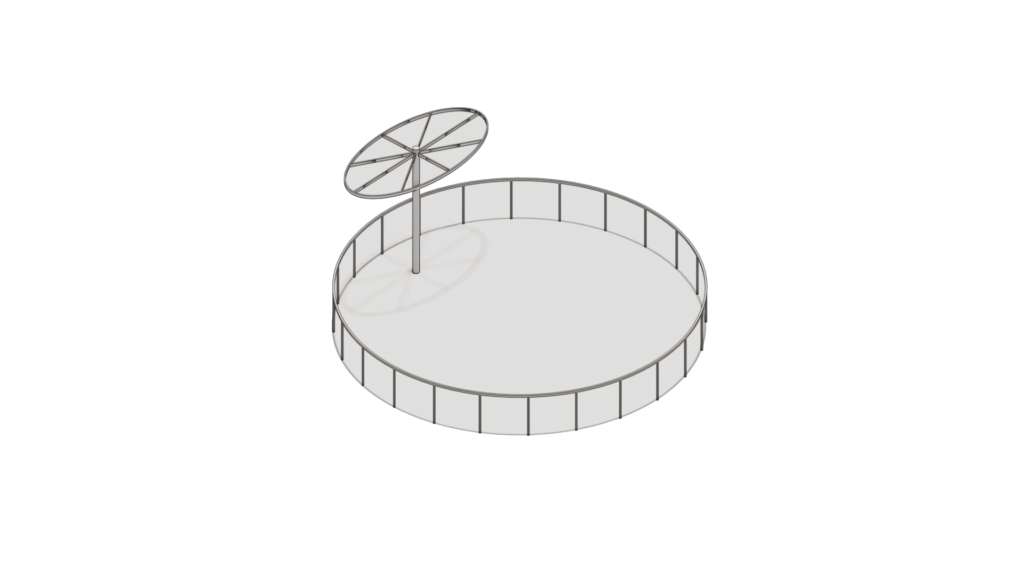
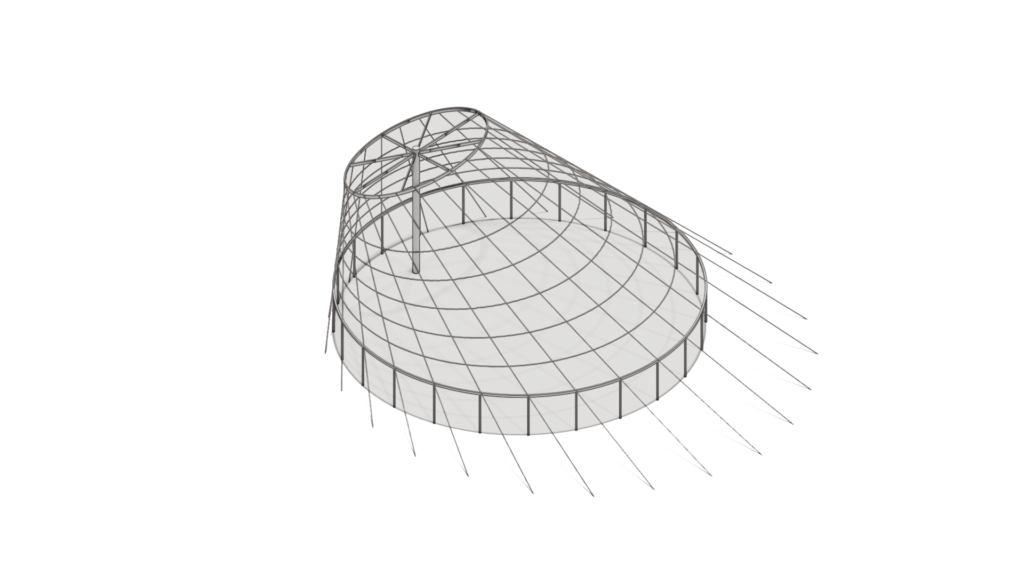
The pavilion consists of three elements: landscape, structure and form
LANDSCAPE
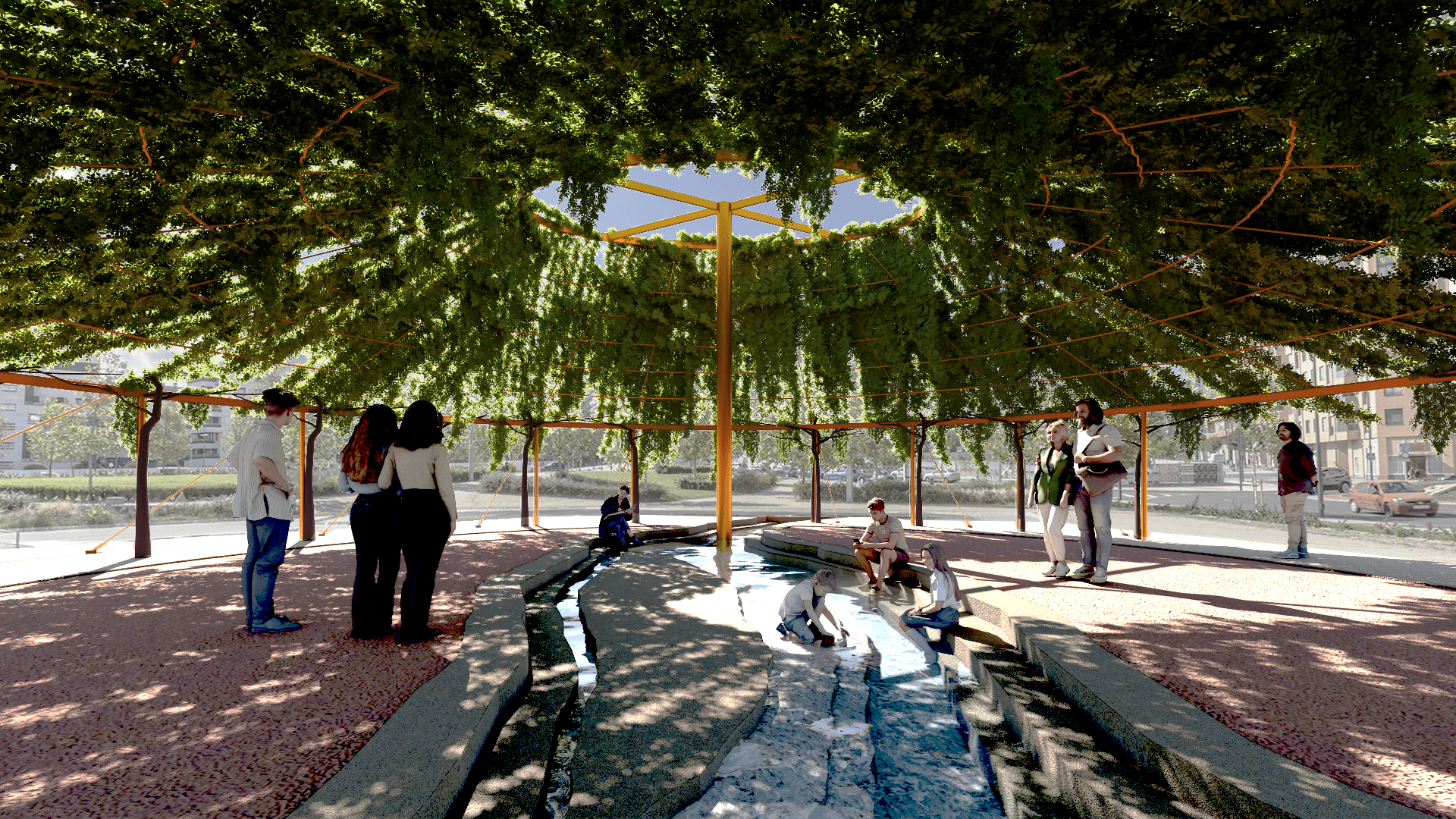
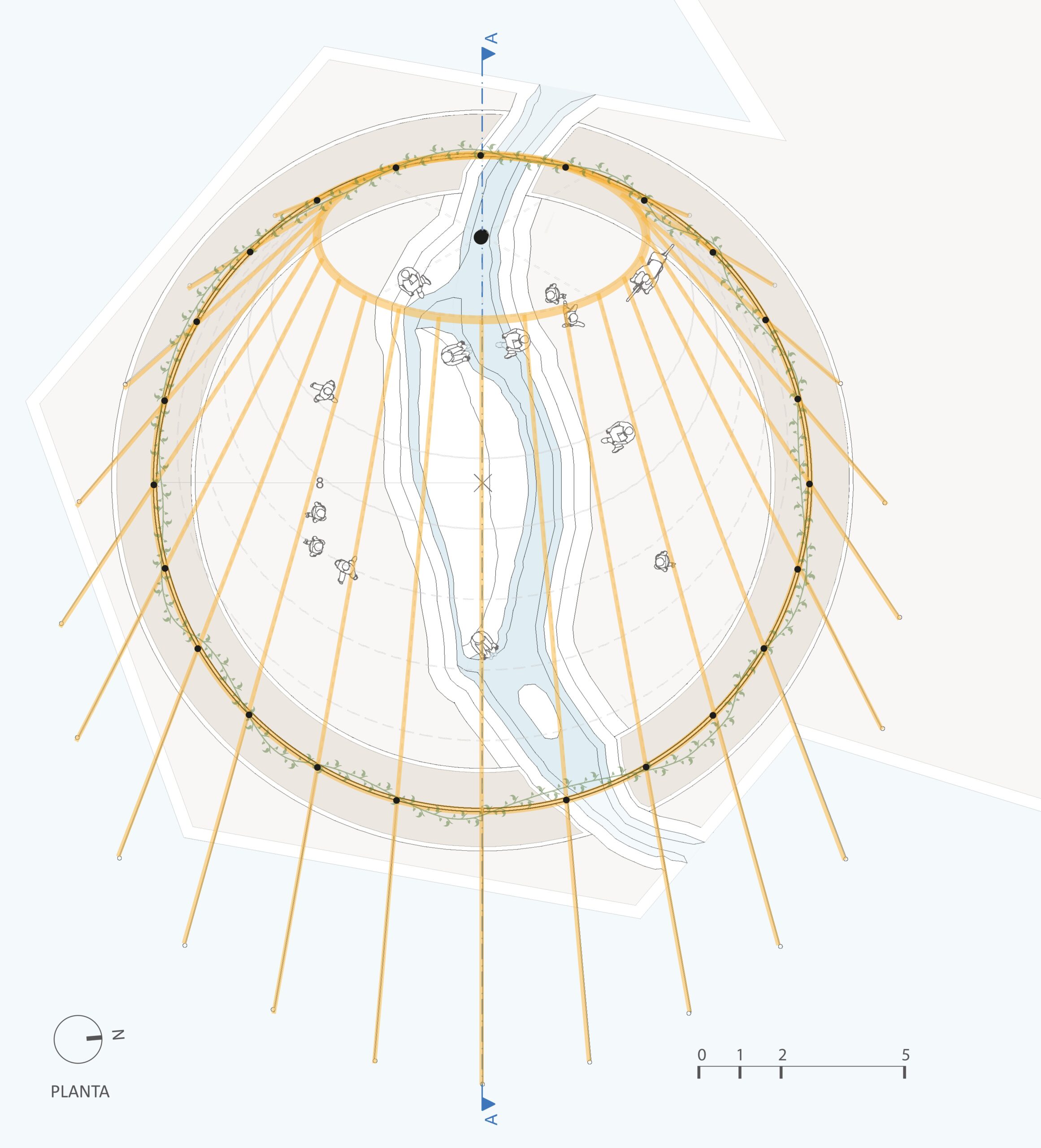
The landscape acts as a connection to the site and its context, and is designed for water infiltration. We propose a sculptural element that interacts with the park's existing pond. This element is linked to the Ebro River that flows throughLogroño, and its form is reflected in a stepped relief—a scaled-down crack in polished concrete. This gesture alludes to the riverside area near Logroño’s historic center, a place rich in local stories and legends. This geographical element is not only a sculptural detail, but can also serve as a seating area where visitors can interact with the water and benefit from the evaporation that creates a microclimate.
Structure
The pavilion is covered in a living canopy: grapevines symbolizing the agricultural traditions of La Rioja. Planted at the base, the vines will grow and eventually cover the entire structure, transforming it into a shady, green retreat. This natural canopy will evolve to create an island of shade and a climate-controlled sanctuary.
We see the growth of the vines as a performative act that unites architecture and time, while providing shade and a connection to the region’s deep cultural roots. We envision local actors and winemakers playing a key role in the management and care of the plants, thus enriching the pavilion’s social value.
Shape
The large structure covered in vines contains a symbolic reference to the scallop shell, a guide for those who have made the pilgrimage to the Santiago de Compostela Cathedral for centuries. Inspired by this symbol of community, we want to transform the pavilion into a regional landmark. The pavilion subtly points in the direction of the Santiago Cathedral, providing both pilgrims and locals with a guide and a resting place at this crossroads.
This climatic refuge is a distinctive structure that can be duplicated throughout La Rioja, adapted to the terrain to link to local features or references. In places where vines are not viable as shade, local recycled materials such as fabric, ceramics, wood or metal sheets can be used. This ensures that the pavilion concept remains a modular, adaptable solution to provide shade, comfort and a sense of community in different environments.